
inquiry
Leave Your Message

2026 Top Heat Wrap POF Film Suppliers and Prices?

The 2026 Heat Wrap Pof Film market is becoming more technical, price-sensitive, and difficult to compare. Suppliers now compete on shrink performance, clarity, sealing strength, recycled content, and delivery reliability. Buyers also face confusing quotations, because film prices change with resin costs, thickness, order volume, and regional freight.

Recent studies from Smithers, Grand View Research, and The Freedonia Group indicate continued demand for polyolefin shrink films across food, beverage, household, and retail packaging. Their findings also show an important limitation: market estimates differ by product definition and geographic coverage. That uncertainty matters when comparing supplier claims. A low price may reflect thinner film, weaker sealing, or less consistent gauge control.

Performance comes first.

Dr. Susan Selke, a recognized packaging-materials researcher, has stated, “Packaging is a system, not merely a material.” This principle applies directly to Heat Wrap Pof Film. A roll that looks inexpensive may waste more material around sharp-edged cartons or require higher tunnel temperatures. In practical purchasing work, buyers should examine technical data sheets, sample trials, minimum order quantities, and delivered prices. Supplier audits can reveal differences invisible in online listings. Even experienced buyers can overlook them.

This guide reviews leading 2026 suppliers, regional availability, film specifications, and realistic price ranges. It also considers machine compatibility, packaging speed, and sustainability claims. The comparison is useful, but not perfect. Prices move quickly. Verify every quotation before committing.
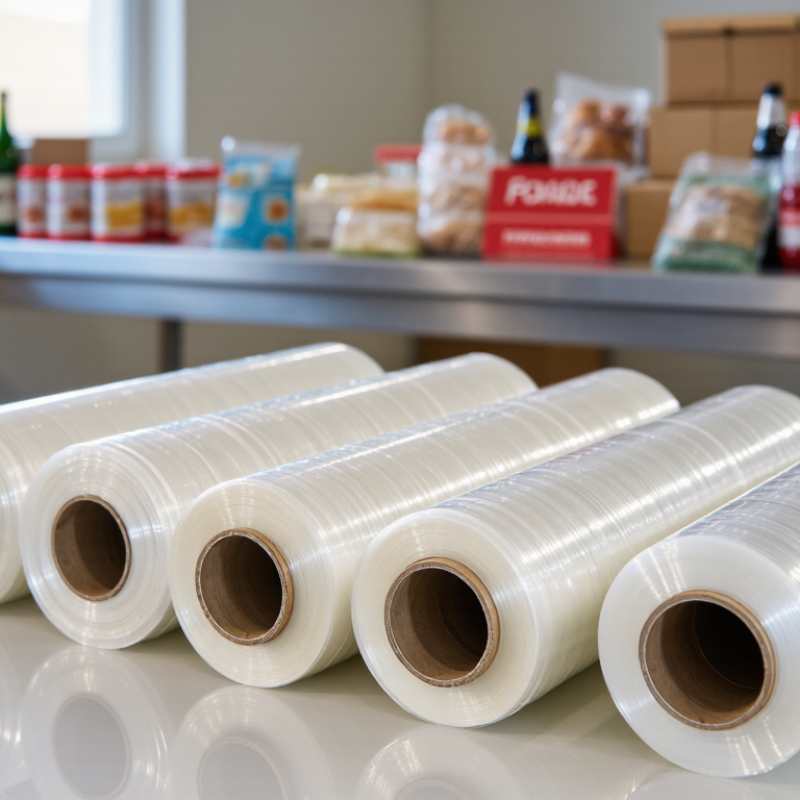
2026 Top Heat Wrap POF Film Suppliers and Prices?

POF Heat Wrap Film: Structure, Shrink Rates, and Key Performance Data

In 2026, POF heat wrap film remains a practical choice for cartons, books, and irregular retail packs. Its structure usually combines three or five coextruded layers, often using polyethylene-based sealant layers around a tougher core. This design improves clarity, puncture resistance, and sealing consistency. Smithers’ flexible-packaging research identifies downgauging and recyclable mono-material structures as continuing market priorities.

Typical POF film thickness ranges from 12 to 30 microns. Commercial grades commonly deliver 50–65% transverse shrink and 0–10% machine-direction shrink, depending on the formulation and test method. Shrink temperatures often fall between 120°C and 160°C. ASTM D2732 testing is essential because free-shrink values can change with temperature, dwell time, and specimen direction. Numbers alone mislead.

Performance also depends on tensile strength, seal strength, and haze. ASTM D882 is widely used for tensile testing, while packaging converters often check seal integrity after hot-air or tunnel processing. Industry data from Grand View Research indicates that demand for high-clarity and lightweight packaging films continues to expand, especially in automated packing lines. In practical trials, a 15-micron film may reduce material use, but it can wrinkle around sharp corners. That trade-off deserves attention. Measure it. Suppliers should provide thickness tolerance, shrink curves, sealing temperature, and test conditions with every quotation. Without those details, comparing prices is surprisingly unreliable.

2026 Market Benchmarks: Film Thickness, Roll Sizes, and Price Ranges

In 2026, POF heat shrink film is commonly quoted by thickness, roll length, and delivered weight. Standard thicknesses range from 10 to 19 microns. Fifteen microns remains a practical choice for retail multipacks and light cartons. Thicker 19-micron film offers better puncture resistance, but it can increase material costs.

Typical roll widths run from 200 to 1,200 millimeters. Roll lengths often range between 1,000 and 3,000 meters. Narrow rolls suit small sealing machines, while wider rolls reduce changeovers on automated lines.

A useful benchmark is 10–15 microns for low-load packaging and 15–19 microns for heavier products. Actual performance depends on sealing temperature, tunnel airflow, and machine speed.

In 2026, indicative bulk prices may range from 1.60 to 2.80 USD per kilogram for standard grades. Higher-clarity or stronger formulations may reach 2.80 to 4.20 USD per kilogram. These figures exclude freight, duties, and regional conversion costs.

Supplier quotes should state core size, net roll weight, film shrink ratio, and tolerance. Small orders often look inexpensive, but freight can quietly dominate the invoice. That detail is easy to miss.

A further concern is inconsistent thickness across a roll, which may cause weak seals or uneven shrinking. Buyers should request a recent technical data sheet and test samples before approving volume production.

Top POF Film Suppliers Compared by Capacity, Certifications, and Regions

The 2026 POF film market is increasingly regional, not purely price-driven. Grand View Research valued the global POF shrink film market at roughly US$1.4 billion in 2023, with steady growth expected through 2030. Capacity comparisons should examine annual tonnage, production-line width, film gauge, and backup equipment. A supplier producing 30,000 tonnes annually may still struggle with urgent orders if one extrusion line stops. That detail is often missed.

Asia-Pacific remains the main manufacturing base, while Europe and North America offer shorter delivery routes and stronger technical support. Smithers’ polyolefin film outlook highlights continued demand from food, beverage, and multipack packaging. Buyers should request regional warehouse locations, average lead times, and export experience. Ask for recent production records. Not only brochures.

Certifications also separate capable suppliers from low-cost traders. ISO 9001 supports process control, while BRCGS Packaging or FSSC 22000 can strengthen food-packaging assurance. Food-contact declarations should match the destination market and the actual film structure. Check certificate scope, expiry dates, and audited manufacturing sites. Pricing needs equal care: compare resin formulation, thickness tolerance, roll length, packaging, freight, and testing fees. A lower kilogram price may hide higher waste. I would still verify shrink performance on the buyer’s tunnel, because laboratory results can look better than factory reality.

2026 Top Heat Wrap POF Film Suppliers and Prices? - Top POF Film Suppliers Compared by Capacity, Certifications, and Regions

Anonymous supplier comparison based on common commercial specifications and indicative 2026 market quotation ranges for polyolefin shrink film.

Supplier Profile Primary Region Typical Annual POF Capacity Standard Film Structure Common Thickness Range Maximum Film Width Typical Shrinkage Heat-Sealing Performance Common Certifications Indicative 2026 Price Typical MOQ Best Fit
Profile A — Large Integrated Producer East Asia 30,000–60,000 metric tons/year Three-layer or five-layer coextruded POF; center-fold and single-wound formats 10–25 microns 2,000–3,000 mm 55–65% transverse; 5–15% machine direction Strong seal range with good resistance to seal contamination ISO 9001ISO 14001BRCGS PackagingFood-contact compliance US$1.45–2.05/kg 1–3 metric tons per specification High-volume food, beverage, printing, and multipack applications
Profile B — Export-Oriented Converter East Asia 12,000–30,000 metric tons/year Three-layer coextruded POF with general-purpose and low-temperature grades 12–25 microns 1,500–2,500 mm 55–62% transverse; 5–12% machine direction Balanced sealing, good clarity, and stable performance on automatic wrappers ISO 9001RoHSREACHFood-contact compliance US$1.50–2.15/kg 500 kg–2 metric tons per specification Distributors, contract packaging, and private-label orders
Profile C — European Specialty Producer Western and Central Europe 8,000–20,000 metric tons/year High-clarity multilayer POF; recyclable-design and downgauged options 10–19 microns 1,800–2,600 mm 50–60% transverse; 5–12% machine direction Low-temperature sealing and controlled shrink for premium presentation ISO 9001ISO 14001BRCGS PackagingEU food-contact compliance US$2.10–3.10/kg 300–1,000 kg per specification Premium retail packaging, cosmetics, bakery, and printed products
Profile D — North American Domestic Supplier United States and Canada 10,000–25,000 metric tons/year Three-layer and five-layer POF for standard and heavy-duty applications 12–30 microns 1,500–2,400 mm 55–65% transverse; 5–15% machine direction High puncture resistance and consistent sealing on high-speed equipment ISO 9001FDA food-contact complianceBRCGS PackagingProp 65 documentation US$2.00–3.00/kg 500 kg–2 metric tons per specification Regional supply programs, industrial goods, and short lead-time orders
Profile E — Southeast Asian Cost-Competitive Producer Southeast Asia 10,000–25,000 metric tons/year Three-layer coextruded POF; general-purpose and heavy-duty grades 12–30 microns 1,500–2,500 mm 55–65% transverse; 5–15% machine direction Good all-round sealing with competitive material cost ISO 9001ISO 14001HACCPFood-contact compliance US$1.55–2.25/kg 500 kg–2 metric tons per specification Consumer goods, household products, and export-oriented packaging
Profile F — Middle East and South Asia Regional Producer Middle East and South Asia 5,000–15,000 metric tons/year Three-layer POF for manual, semi-automatic, and automatic wrapping 12–30 microns 1,200–2,000 mm 50–65% transverse; 5–15% machine direction Reliable general-purpose sealing with standard shrink tunnels ISO 9001GCC food-contact complianceHACCPRoHS US$1.60–2.35/kg 500 kg–1 metric ton per specification Regional distributors, tissue, confectionery, and general retail packaging
Profile G — Latin American Regional Supplier Latin America 4,000–12,000 metric tons/year Three-layer POF in center-fold and single-wound formats 15–30 microns 1,200–2,000 mm 50–62% transverse; 5–15% machine direction Stable sealing for common L-sealers and side-seal machines ISO 9001HACCPFood-contact complianceLocal regulatory documentation US$1.85–2.70/kg 500 kg–1 metric ton per specification Food, beverages, stationery, and regional contract packaging
Profile H — Recycled-Content and Downgauging Specialist Europe, North America, and selected Asian markets 3,000–10,000 metric tons/year Material-optimized POF with downgauged structures and limited recycled-content options 9–19 microns 1,500–2,400 mm 50–60% transverse; 5–12% machine direction Controlled sealing window; equipment trials usually recommended ISO 9001ISO 14001Recycled-content verificationFood-contact documentation where applicable US$2.20–3.40/kg 300–1,000 kg per specification Brands and converters targeting lower material use or sustainability objectives
Pricing and specification note: Prices are indicative bulk ranges in US dollars per kilogram for clear, unprinted POF film and may vary with resin costs, film thickness, width, roll length, order volume, freight, duties, payment terms, and certification requirements. Capacity figures represent typical commercial ranges for comparable supplier profiles rather than company-specific disclosures. Actual compliance should be confirmed using current certificates, declarations of conformity, technical data sheets, and product samples before purchasing.

Supplier Evaluation: MOQ, Lead Times, Printing Options, and Quality Metrics

In 2026, evaluating heat wrap POF film suppliers requires more than comparing quoted prices. A low price may hide higher waste, unstable thickness, or expensive freight. Request a written quotation based on film gauge, roll width, order volume, packaging, and delivery terms. Compare the landed cost, not only the price per kilogram. Small details matter.

MOQ can range from trial cartons to several tons, depending on film type and customization. Ask whether mixed sizes are allowed. Confirm production lead times in writing, especially for printed film or seasonal orders. Standard material may ship within two to four weeks, while printed orders often need additional cylinder preparation and approval time. Delays happen.

Printing options should include color limits, repeat length, ink durability, and proof approval. Request samples using your actual packaging equipment when possible. Check seal strength, shrink performance, clarity, haze, thickness uniformity, tensile strength, and puncture resistance. A reliable supplier should provide recent test reports and batch traceability. Independent testing adds confidence for large purchases.

I would also inspect sample rolls for telescoping, blocking, wrinkles, and uneven winding. These defects can increase machine stoppages and scrap. However, laboratory results do not always predict warehouse performance. Temperature, storage time, and operator settings can change results. Keep a small trial order before committing to a long contract. That cautious step may cost more initially, but it exposes weaknesses early.

How to Calculate 2026 POF Film Costs per Kilogram and Finished Package

In 2026, POF film cost should be calculated from measured usage, not only the supplier’s quoted kilogram price. Record film width, thickness, roll length, and actual package dimensions. Film mass can be estimated with this formula: width in meters × length in meters × thickness in meters × film density. Use the supplier’s declared density. Do not assume every film grade has the same value.

For a practical example, a 15-micron film measuring 0.35 meters wide and 1,500 meters long uses approximately 7.2 kilograms, assuming a density near 910 kg/m³. If the delivered film price is 2.40 USD per kilogram, the material cost is about 17.28 USD per roll. Add freight, insurance, duties, local handling, and storage. A low quote can become expensive after delivery.

Small details matter. Add machine waste, often 3% to 8%, based on cutting errors, roll changes, and sealing adjustments. A package using 12 grams of film costs 0.0288 USD at 2.40 USD per kilogram. Then include electricity, labor, maintenance, depreciation, and packaging-line downtime. The finished package cost is not the film price alone. It is film cost plus conversion cost.

I check real consumption against the spreadsheet every week. The numbers sometimes disagree. That is useful. Actual film tension, product shape, and operator settings can change usage. Keep separate calculations for quoted cost, landed cost, and verified production cost. Review all 2026 prices again when freight terms or energy rates change.