Global buyers need more than a long supplier list when selecting Pof Shrink Film in 2026. They need consistent quality, dependable delivery, and evidence behind every claim. A strong manufacturer should demonstrate practical experience with film extrusion, printing, slitting, and shrink performance. Factory audits, technical data sheets, sample trials, and transparent certifications can reveal far more than polished websites.
This guide examines leading POF Shrink Film manufacturers through a buyer-focused lens. It considers film clarity, sealing strength, shrink balance, thickness control, packaging options, and production capacity. It also reviews export experience, communication standards, quality-control systems, and responsiveness after shipment. Small details matter. A clean sample roll, stable carton packing, and accurate core dimensions can prevent costly problems on a busy packaging line.
No ranking is flawless. Market conditions change. Some suppliers perform well for large orders but struggle with smaller volumes or custom specifications. Others offer attractive prices while providing limited technical support. Buyers should verify current certificates, test samples under real operating conditions, and confirm delivery terms before signing contracts. This introduction provides a practical starting point, not a substitute for due diligence. The best choice depends on application, equipment, destination market, and risk tolerance. Look closely. Reliable partnerships are built through measurable performance, not promises alone.
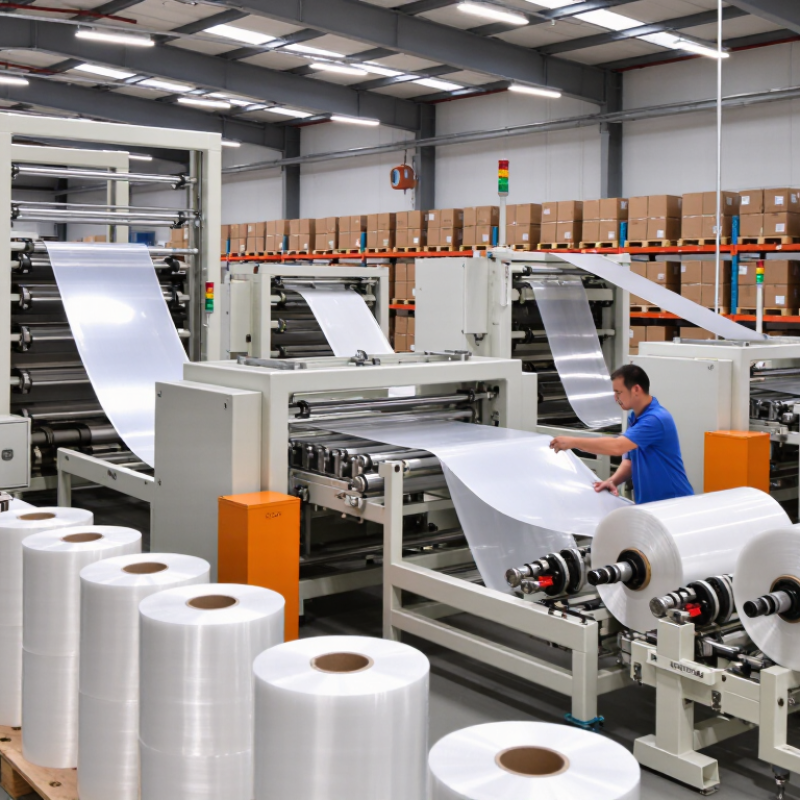
POF shrink film is a transparent polyolefin film designed to contract around products when heated. Most commercial grades use multilayer coextrusion and biaxial orientation. This structure supports clear presentation, balanced shrinkage, and reliable sealing. Typical shrink temperatures range from approximately 120°C to 160°C, depending on film design and equipment.
Its main features include strong puncture resistance, smooth surfaces, and good optical clarity. POF can protect cartons, printed materials, food trays, and retail multipacks from dust and handling damage. It also performs well on high-speed packaging lines. However, film thickness, shrink ratio, and sealing temperature must match the machine. A clear label is not enough. Poor settings can create wrinkles, weak seals, or product distortion.
Demand reflects this practical value. Grand View Research estimated the global shrink film market at about USD 10.6 billion in 2023 and projected continued growth through 2030. Smithers also identifies lightweight flexible films as an important packaging direction, driven by material reduction and automation. These figures cover broader shrink-film categories, not POF alone. The comparison is imperfect, but still useful for global buyers. Food packaging remains a major application, alongside cosmetics, household products, printed goods, and bundled consumer items. Recyclability also requires careful review, because collection systems and local packaging rules differ widely.

Choosing a POF shrink film manufacturer requires more than comparing prices. A reliable supplier should explain film structure, thickness tolerance, shrink performance, and sealing behavior in clear technical language. Ask for recent test reports covering tensile strength, haze, puncture resistance, and shrink percentage. The results should identify test methods, sample conditions, and production dates.
Factory experience matters when packaging lines run at high speed. Request samples from regular production, not only laboratory rolls. Test them on your own equipment, including tunnel temperature, sealing time, and conveyor speed. Watch for wrinkled corners, weak seals, uneven shrinking, or film breaks. Small defects become expensive during long production runs.
A professional manufacturer should maintain documented quality controls, traceable raw materials, and batch records. Check whether the factory can provide applicable food-contact or packaging compliance documents for your target market. Certifications help, but they do not replace direct verification. Visit the facility when possible, or request a live production inspection.
Be careful with impressive samples. They can hide inconsistent performance. I once treated a low price as a strong advantage; the film later needed slower machine settings and created more waste. That mistake changed my evaluation process. Compare total packaging cost, technical support, delivery reliability, and complaint handling. A clear answer is valuable. Silence is not.
Choosing the top POF shrink film manufacturers for global buyers requires more than comparing price lists. Experienced suppliers should explain film thickness, shrink percentage, sealing temperature, and packaging applications clearly. They should also provide recent test data for tensile strength, haze, shrink force, and seal performance.
Samples first. Request rolls from the same production line used for bulk orders. Test them on your own packaging machine, not only in a laboratory. Observe how the film behaves around sharp corners, printed surfaces, and irregular cartons. Reliable manufacturers usually maintain traceable batch records and consistent quality checks. They can also discuss core sizes, roll dimensions, loading plans, and export documentation without vague promises.
A capable manufacturer should support food, household, pharmaceutical, and industrial packaging requirements through suitable grades and controlled production. Ask about quality management systems, material declarations, and compliance documents for the destination market. Do not treat certificates as complete proof. Documents can be current while real production varies. I have seen attractive samples perform well, then show uneven shrinking during longer runs. That is why a pilot order matters. Communication speed matters too, but fast replies do not replace technical evidence. Global buyers should compare total cost, including waste, machine adjustments, freight, and possible delays. The best supplier may not offer the lowest quotation. It should offer predictable film and honest limitations.
Common POF shrink film thickness options used when comparing global suppliers and packaging applications.
Typical POF shrink film is available in multiple thicknesses, with 12–19 microns commonly used for lightweight retail packaging and 25–50 microns selected for heavier, sharper, or higher-protection products. Final selection should be confirmed against the supplier’s technical datasheet, shrink performance, sealing range, and intended packaging equipment.
For global buyers, POF shrink film quality begins with stable resin selection and controlled processing. Experienced manufacturers monitor film thickness, shrinkage, clarity, seal strength, and puncture resistance during every production run. A capable supplier should provide technical data sheets, batch samples, and clear test methods. Production records must connect raw materials with finished rolls. Small variations matter.
Certifications offer useful evidence, but they should not replace direct verification. ISO 9001 supports documented quality management and corrective action procedures. ISO 14001 indicates structured environmental management practices. Food-contact applications may require applicable regional compliance documents and migration testing. Buyers should request current certificates, laboratory reports, and traceability records. Independent audits can reveal weaknesses that sales materials overlook.
Strong production capabilities include automated thickness control, clean extrusion areas, accurate slitting, and reliable packaging. Modern lines should handle different film widths, gauges, and shrink ratios without unstable output. Manufacturers should also explain their inspection frequency and complaint-response process. Fast answers are helpful. Honest limitations are better. Some suppliers report excellent averages while hiding edge defects or seasonal variation. A practical evaluation should include trial orders, stored samples, and performance checks on the buyer’s actual packaging equipment. This approach takes longer, yet it produces more dependable purchasing decisions.
For global buyers, POF shrink film purchasing starts with the specification, not the lowest quotation. Define film thickness, roll width, shrink ratio, sealing temperature, coefficient of friction, and core size. A small mismatch can cause wrinkles, weak seals, or unstable packing-line speeds. Grand View Research valued the global shrink film market at about USD 10.55 billion in 2023, with projected growth through 2030. However, that figure covers several film types, not POF alone. Buyers should avoid treating broad market numbers as direct price guidance.
Request a complete landed-cost offer. It should include resin grade, production waste, packaging, inspection, freight, insurance, duties, and destination charges. Ask for recent test data, not only a certificate. A trial roll should run on the actual tunnel, with recorded temperature settings and breakage rates. Short sentences matter. Test the film. Pricing changes with thickness, order volume, energy costs, and resin markets. A cheaper roll may create higher labor costs.
Logistics deserve equal attention. The World Bank’s 2023 Logistics Performance Index indicates that international supply chains can require roughly 44 days from export preparation to final delivery. Confirm Incoterms, lead time, port options, pallet dimensions, moisture protection, and contingency stock. Evaluate suppliers through audited quality systems, batch traceability, complaint response, and production capacity. Some factories look reliable during sampling but struggle with repeat consistency. That risk is easy to underestimate. For 2026 contracts, use staged orders, measurable acceptance limits, and a documented review after the first shipment.
| Profile | Typical Manufacturing Region | Recommended Buyer Fit | Film Structure | Available Thickness | Typical Maximum Width | Common Film Forms | Indicative Export Price | Typical MOQ | Standard Production Lead Time | Export Packaging | Common Trade Terms | Payment Practice | Quality Documentation | Logistics Considerations | Selection Priority |
|---|---|---|---|---|---|---|---|---|---|---|---|---|---|---|---|
| Profile A | East Asia | High-volume distributors and industrial packaging converters | Center-folded, multilayer co-extruded POF | 10–25 microns | 2,000–2,500 mm | Center-folded rolls; single-wound rolls | USD 2.10–3.10/kg, FOB basis | 3–5 metric tons per specification | 18–30 calendar days after deposit and artwork approval | Moisture-resistant cartons with reinforced pallets | FOB, CIF, CFR, DAP by quotation | 30% deposit and 70% before shipment; documentary terms may be available | COA, thickness report, seal-strength data, SDS, packing list | Best suited to full-container shipments; verify roll loading plan and humidity protection | Best for volume |
| Profile B | South Asia | Importers seeking competitive pricing and flexible order sizes | Multilayer POF with general-purpose sealing layer | 12–25 microns | 1,600–2,000 mm | Center-folded rolls; pre-perforated rolls | USD 2.00–2.90/kg, FOB basis | 1–3 metric tons per thickness and width | 20–35 calendar days | Export cartons, stretch-wrapped pallets, corner protection | FOB, CFR, CIF | 20–30% deposit; balance against shipping documents or before dispatch | COA, basic inspection report, SDS, certificate of origin upon request | Allow additional time for transshipment and port congestion; confirm container schedule | Best for value |
| Profile C | Southeast Asia | Regional buyers requiring shorter ocean routes and stable replenishment | High-clarity, multilayer co-extruded POF | 10–30 microns | 2,000–2,400 mm | Center-folded rolls; single-wound rolls; printed outer film | USD 2.25–3.35/kg, FOB basis | 2–4 metric tons per specification | 15–28 calendar days | Cartons or palletized rolls with barrier film wrapping | EXW, FOB, CIF, DDP for selected destinations | 30% deposit and 70% before shipment; credit subject to approval | COA, optical inspection data, seal-strength report, RoHS or REACH statement when applicable | Suitable for Asia-Pacific and Middle East routes; check port cut-off dates and feeder connections | Best for regional supply |
| Profile D | Europe | Retail, food-contact, and compliance-sensitive packaging programs | High-clarity POF with controlled shrink and sealing performance | 10–25 microns | 1,800–2,200 mm | Center-folded rolls; single-wound rolls; machine-grade rolls | USD 3.20–4.60/kg, EXW or FCA basis | 1–2 metric tons per specification | 10–25 calendar days | Recyclable cartons, pallet labels, batch traceability labels | EXW, FCA, DAP, CPT | Open-account or payment before shipment for approved buyers; otherwise deposit-based | COA, EU food-contact declaration where applicable, REACH statement, technical data sheet | Shorter intra-European transit; confirm VAT, customs, and product-compliance responsibilities | Best for compliance |
| Profile E | North America | Domestic and nearshore buyers needing responsive technical support | General-purpose and premium-grade co-extruded POF | 12–30 microns | 1,800–2,100 mm | Center-folded rolls; single-wound rolls; custom slit rolls | USD 3.40–5.20/kg, EXW or FCA basis | 1–3 metric tons per specification | 10–21 calendar days for standard grades | Palletized cartons with barcode and batch identification | EXW, FCA, DAP, domestic delivered pricing | Net terms for approved accounts; prepaid orders for new buyers | COA, lot traceability, technical data sheet, regulatory statements as required | Lower inland transit risk for regional customers; compare delivered cost with imported alternatives | Best for responsiveness |
| Profile F | Middle East | Buyers serving food, tissue, consumer goods, and pallet-overwrap markets | General-purpose POF with balanced shrink and seal strength | 12–25 microns | 1,600–2,000 mm | Center-folded rolls; machine rolls | USD 2.35–3.40/kg, FOB or CFR basis | 2–5 metric tons per specification | 18–32 calendar days | Heat-treated pallets where required; moisture-resistant cartons | FOB, CFR, CIF | 30% deposit and balance before shipment or against copy documents | COA, SDS, certificate of origin, packing list, inspection report | Review container temperatures, summer storage conditions, and destination-port demurrage rules | Best for route flexibility |
| Profile G | Latin America | Importers needing mixed-width orders and distributor-friendly packaging | Multilayer POF for manual and automatic shrink equipment | 12–30 microns | 1,800–2,000 mm | Center-folded rolls; narrow slit rolls; pre-perforated rolls | USD 2.50–3.70/kg, FOB or CIF basis | 1–3 metric tons per specification | 20–40 calendar days | Cartons with Spanish or Portuguese labeling when requested | FOB, CIF, CFR, DAP by destination | 30% deposit and 70% before shipment; letter of credit may be accepted | COA, SDS, certificate of origin, commercial invoice, packing list | Budget for customs clearance and inland delivery; verify local labeling and import-tax requirements | Best for mixed orders |
| Profile H | Global contract-manufacturing network | Private-label buyers requiring custom widths, packaging, or repeat production | Specification-based multilayer POF with configurable additives | 10–40 microns | Up to approximately 2,500 mm, subject to line capability | Center-folded rolls; single-wound rolls; custom slit rolls | USD 2.60–4.20/kg, depending on grade and order volume | 5–10 metric tons for custom specifications | 25–45 calendar days, including trial approval | Custom cartons, pallet configuration, barcode, and lot coding | EXW, FOB, CIF, DAP | Deposit-based for initial orders; negotiated terms after qualification | COA, approved sample record, process specification, inspection plan, SDS | Require pre-production samples and written approval of dimensions, shrink curve, and sealing conditions | Best for customization |